Look at this! Look at this fucking thing! This was done in 1986, and used absolutely no CGI whatsoever. It was ALL practical, and ALL done through puppetry. Look at the last gif. Over a dozen vines are moving at once along with its head, lips, and tongue! In interviews Rick Moranis has stated he often forgot he was working with a puppet, as opposed to a really ugly guy. Even today it looks so real. Audrey ii is nothing short of miraculous
The practical effects of Little Shop of Horrors was fucking astounding. It’s worth it to mention that, in the scenes where the plant is moving, the filming was slowed to 12 to 16 frames a second, so that the film could be sped up to give the Audrey II a more lifelike appearance. In such scenes where actors like Rick Moranis had to speak with the plant, he had to mouth his lines at a slower-than-normal speed while still looking convincing, only to have his voice added in post.
It’s also worth mentioning that a crew of 60+ puppeteers were needed to operate the plant, as the entire puppet weighed over a ton.
So my roommate and I got these Rudolph Christmas coloring books a couple of weeks back. Since it’s finals week, I wanted to ease my mind into studying by coloring. First time opening the book and I saw this picture..
And I thought to myself
Oh my god do I try.
If this post gets to 200,000 notes, I’ll make this art come to life by making it a Christmas cosplay no one wanted.
WELP we did it fam. Expect live action He-man Memenose Reindeer. Coming to a theater near you December 2018
when i watch old movies i’m constantly surprised by how much acting has improved. not that the acting in the classics is bad, it’s just often kind of artificial? it’s acting-y. it’s like stage acting.
it took some decades for the arts of acting and filmmaking to catch up to the potential that was in movies all along; stuff like microexpressions and silences and eyes, oh man people are SO much better at acting with their eyes than they were in the 40′s, or even the 70′s.
the performances we take for granted in adventure movies and comedies now would’ve blown the critics’ socks off in the days of ‘casablanca’.
there’s a weird period in film where you can see the transition happening. right around the fifties, I think. the example my prof used when i learned about it was marlon brando in “a streetcar named desire” – he was using stanislavski acting methods and this new hyper-realistic style and most or all of his costars were still using the old, highly-stylized way of acting. it makes it way more obvious how false it is.
i even noticed it in ‘the sting’, which was 1973. i actually think they used it on purpose to get the viewer fished in by the second layer of the con; the grifters at the bookie’s were acting like they were acting, and the grifters playing the feds were acting for reals. if you’re used to setting your suspension of disbelief at the first set’s level, then the second set are gonna blow right past you.
or possibly the guys playing the grifters playing the feds just happened to be using the realistic style for their own reason, and it coincidentally made the plot twist work better. but i like to think it was deliberate.
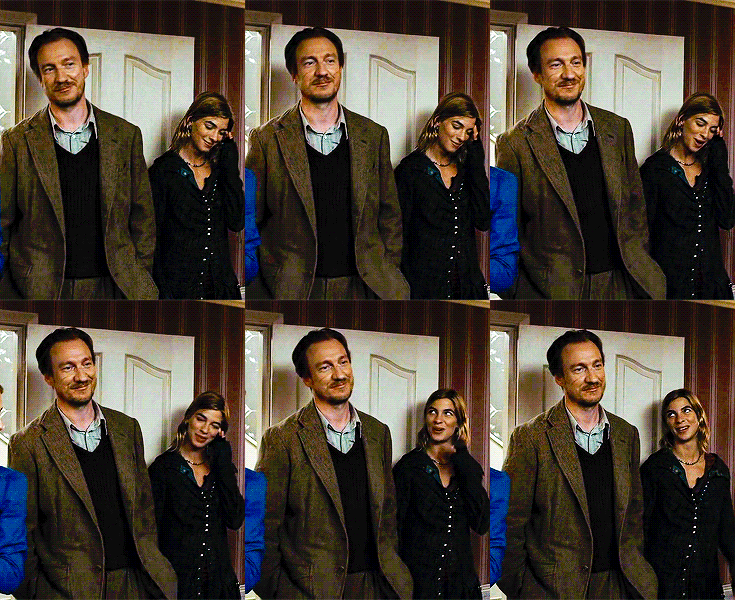
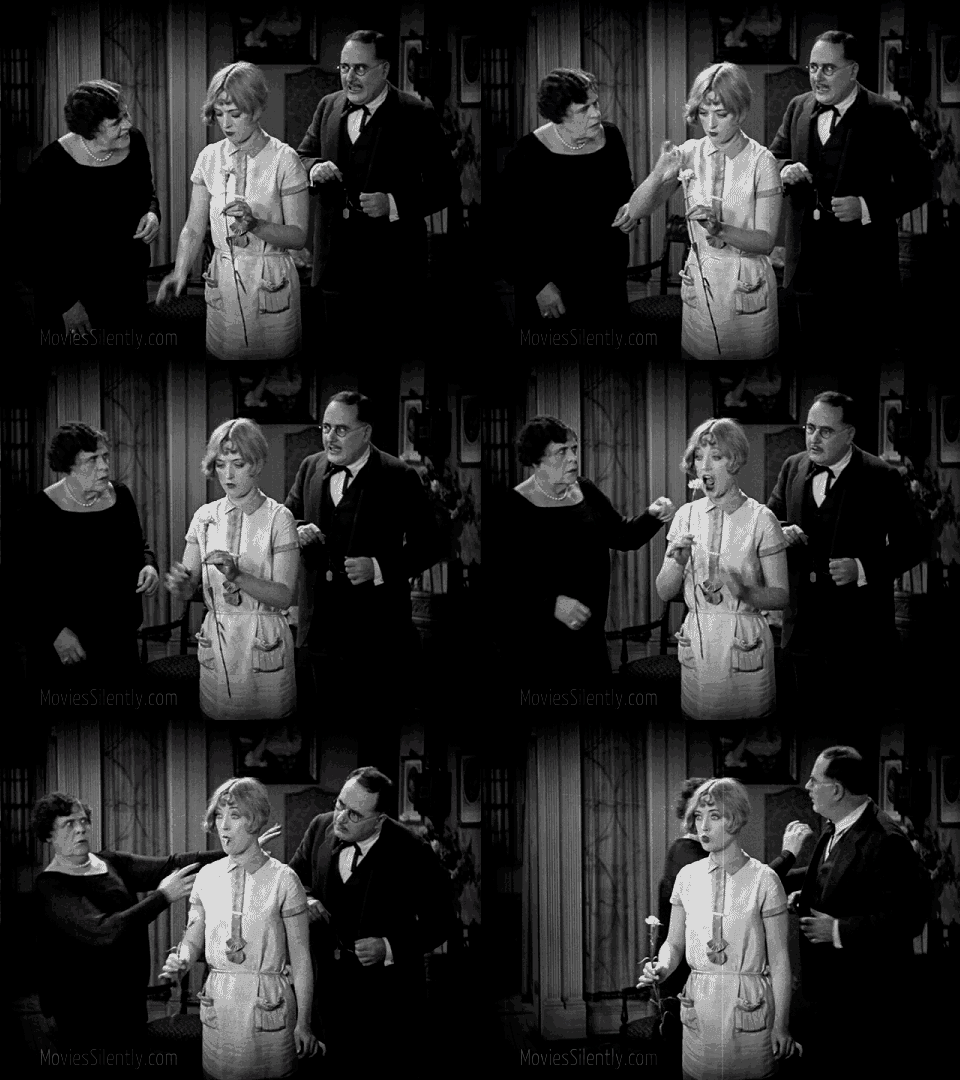
i was thinking about this again, and when you know what to look for, it’s really obvious: old movies are stage acting, not movie acting. it just didn’t really occur to anyone to make the camera bend to the actors, rather than the other way around. just image search old movie screenshots and clips and gifs, you’ll see it. the way people march up to their mark and stand there, the way they deliver their lines rather than inhabiting the character. the way they’re framed in an unmoving center-stage.
this is a charming little tableau, quirky and unexpected, but it’s a tableau. it lives in a box.
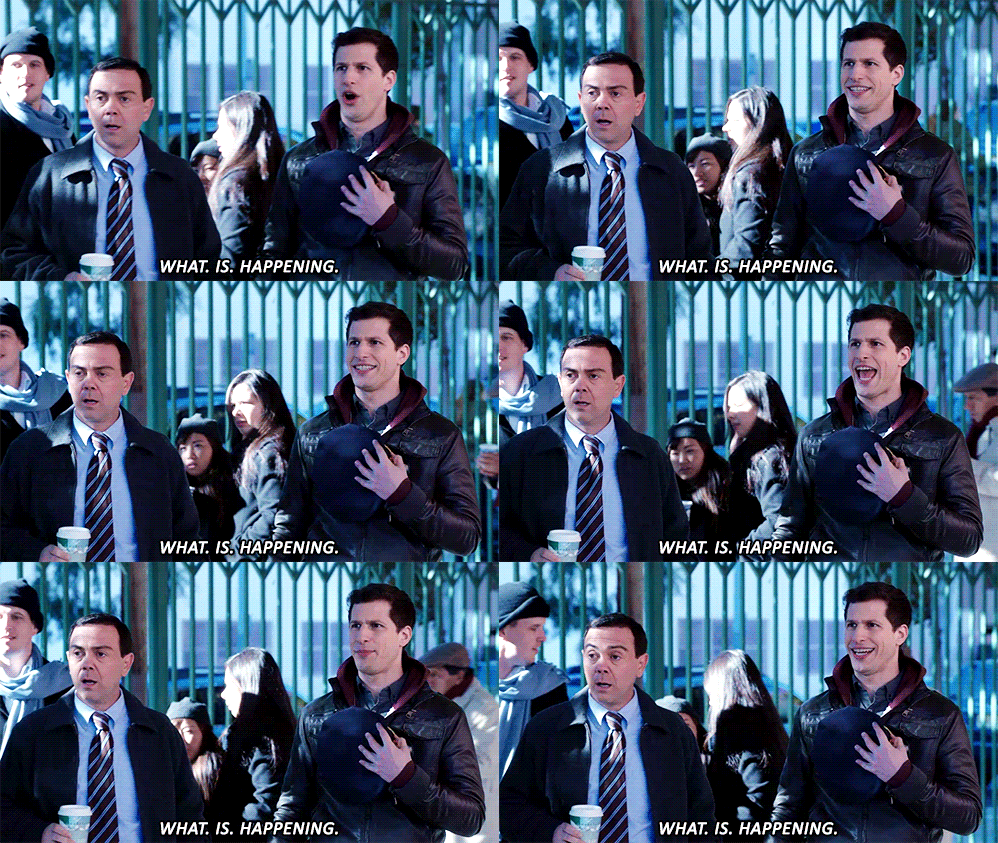
now, i usually watch action movies, and i didn’t think it was fair to compare an action movie with what appears to be an indoor sort of story, but i do watch some comedy tv. so i looked for a brooklyn 99 gif with a similar framing, intending to point out that the camera moves, and the characters aren’t stuck inside the box. but i couldn’t even find the framing. they literally never have all the characters in the same plane, facing the camera, interacting only within the staging area. even when they’re not traveling, they’re moving around, and they treat things outside the ‘stage’ as real and interact with them, even if it’s only to stare in delighted horror.
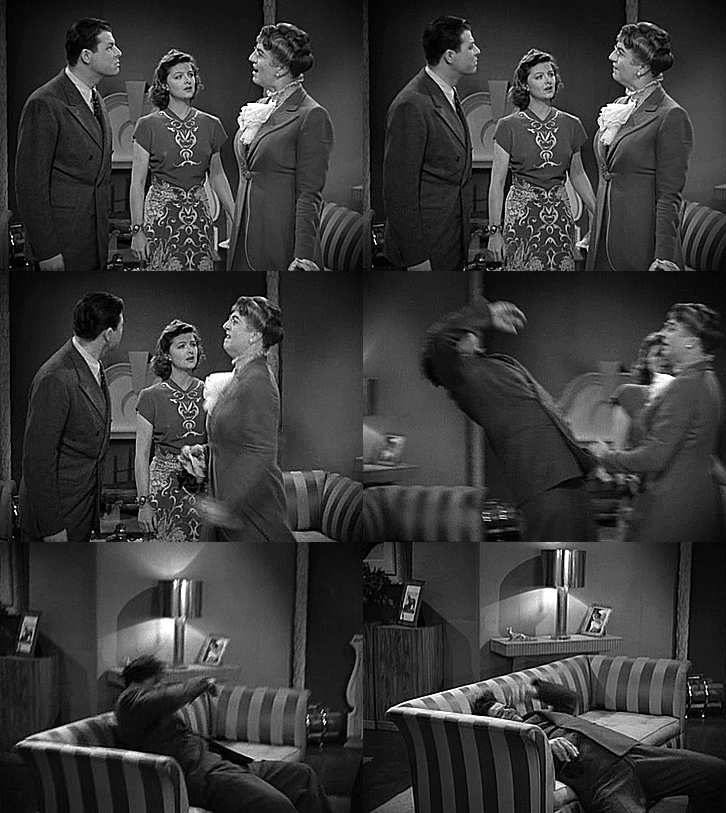
as for action, it took a while for the movies to figure out what, exactly they wanted to show us, and how to act it. here’s a comedy punch:
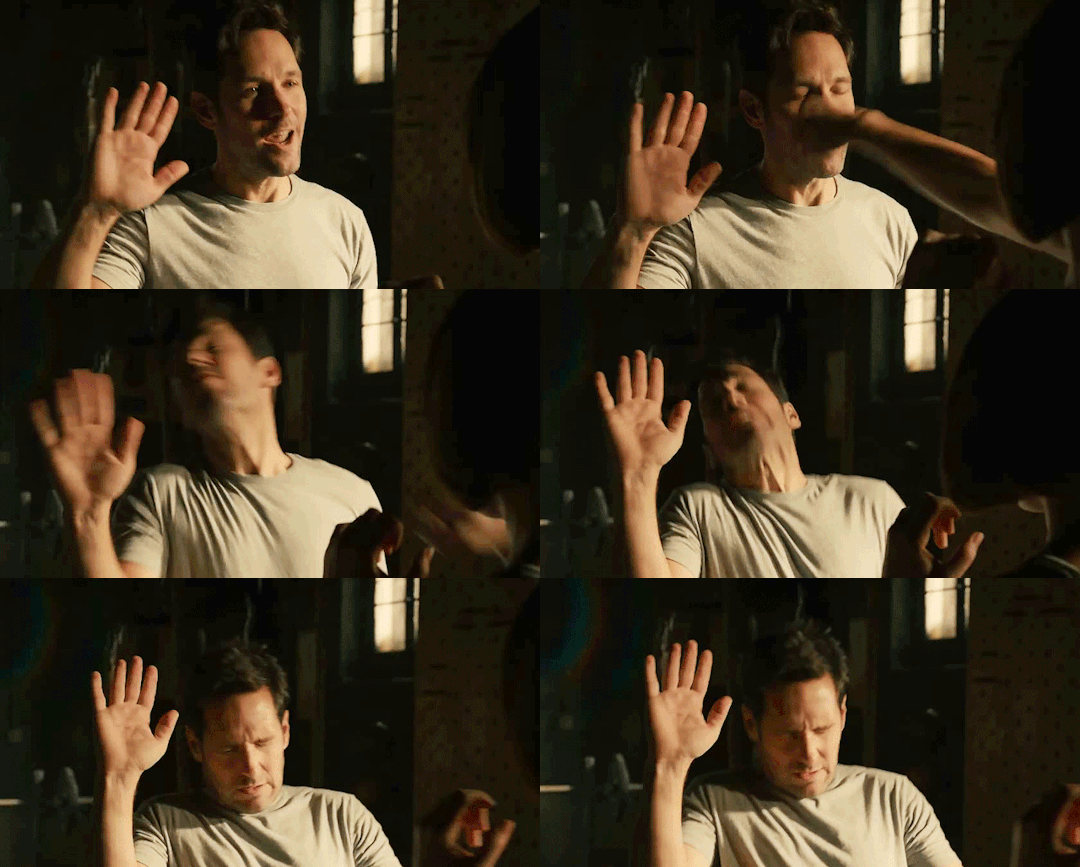
here, also, is a comedy punch:
the first one looks like a stage direction written on a script. the second one looks like your friends horsing around and being jerks to each other. the first one is just not believable. the physics doesn’t work. the reaction is fakey. everyone’s stiff. even the movement of the camera is kind of wooden. the second one looks real right down to the cringe of his shoulder, and the camera feels startled too.
i’m not saying this to dis old movies, i’m just fascinated and impressed by how much the art has advanced!
This is true for all parts of filmmaking. We do tend to get better at these things with time.
“I know where the weight is in every drawing; I know where the weight is going to and where it is coming from. On a four-legged animal, or a two-legged animal, or if it’s a hand moving, I know where the weight is.”– Milt Kahl








 Firebird Scratches